We built SGP Waterproofing around one idea: a property owner shouldn't have to wait three days for someone to look at a wet wall, no matter what state they're in.

Every SGP Waterproofing technician carries the same licensing, the same insurance coverage, and the same set of tools whether the job is a single cracked footing or a full interior drainage system, regardless of which state they're working in.
We keep crews staffed locally in each market rather than routing every call through one national center, which means the technician who answers your questions on the phone is often the same person standing in your basement a few hours later.
Soil composition changes how much hydrostatic pressure builds against a foundation wall, and that mix of clay-heavy and sandy soils behaves differently depending on the region, sometimes town to town. A crew that hasn't worked a given market tends to size drainage systems using generic assumptions instead of what's actually under the yard.
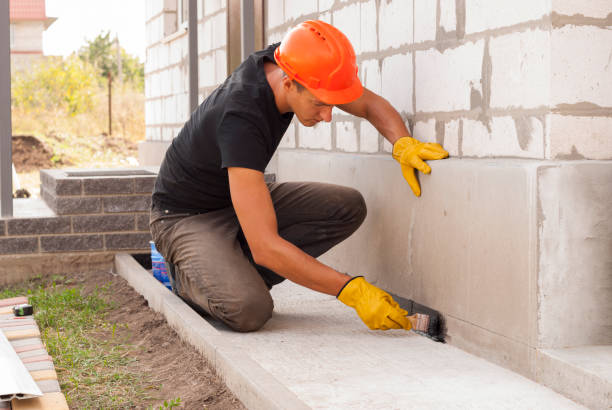
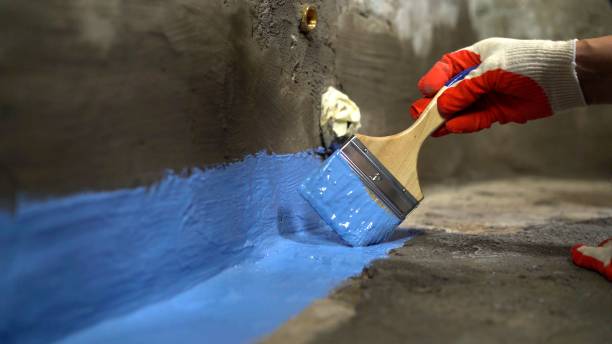
We also see a lot of properties where a previous waterproofing attempt only addressed the symptom — a topical sealant painted over a cracked wall, for example — without solving the pressure or grading issue causing the crack in the first place. Part of every inspection is checking for that kind of prior patch job before we recommend anything new.

Water damage rarely announces itself with a flooded basement on day one. It usually shows up as one of these smaller signals first, and seasonal moisture swings in many regions tend to speed the timeline up.
That damp, earthy smell in a finished or unfinished basement is usually mold or mildew feeding on moisture that's already gotten past your walls.
Efflorescence forms when water carries dissolved minerals through porous concrete and leaves them on the surface as it dries — a clear sign moisture is actively passing through.
A crack that's a sixteenth of an inch wide today can become a sixteenth of an inch wider by next spring if the pressure behind the wall isn't relieved.
Drywall that feels soft, bubbles, or shows a tide line near the floor is already absorbing groundwater — by the time you see it, the insulation behind it is usually soaked too.
If your window wells hold water for more than an hour after a storm, that water has nowhere to go but toward the seal around your basement window.
Puddling near the foundation that doesn't drain within a few hours usually means grading, gutters, or a failing perimeter drain — and it's the fastest path to a flooded basement.
We scope every job in person before quoting it, because two houses with the same symptom rarely need the same fix. These are the five services that make up most of our workload.
A burst window well seal or a failed check valve can put inches of water in a basement in under an hour — our emergency crews carry truck-mounted extraction pumps and moisture meters to start mitigation the same day you call.
For finished basements we route the drain tile beneath the existing slab edge, which limits how much flooring has to come up during installation.
We work with property managers on phased scheduling so a commercial waterproofing retrofit doesn't shut down an entire building at once.
We classify every crack before injecting it — structural cracks get epoxy, active leaks get flexible polyurethane that expands to fill voids behind the wall.
We also insulate exposed ductwork inside the crawl space while we're in there, since condensation on cold ducts is a second moisture source people rarely think about.
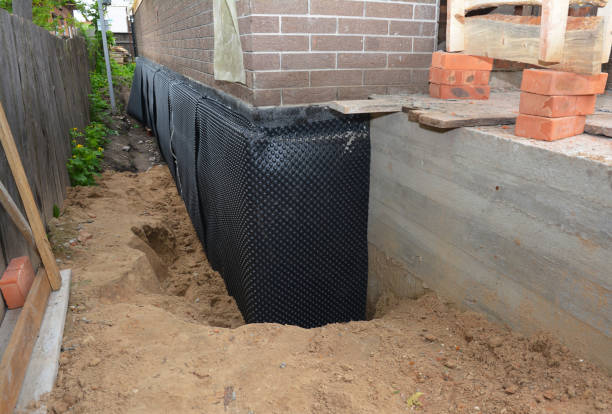
Exterior French drains paired with corrected grading are usually the first thing we recommend for a property that's flooding from the outside in, not the inside out.
A dispatcher walks through symptoms with you on the phone so the crew that shows up already has a rough idea what they're dealing with.
A technician maps moisture readings, checks grading, and identifies whether the source is groundwater, surface water, or condensation.
You get a flat-rate, itemized quote before any work starts — no verbal estimate that changes once the crew shows up.
Once installation wraps, we test the sump pump under load and walk you through the warranty paperwork before we leave the site.
We quote the whole job as one flat number, so the price on the invoice matches the price we quoted on day one.
Local staffing means the technician answering your call today can usually be on-site the same day, not on a waitlist behind jobs from another region entirely.
Every technician trains on interior drain tile installation, sump system sizing, and crack classification before they lead a job on their own.
If a sealed crack reopens or a sump system underperforms within the warranty window, we come back and make it right at no extra charge.

We document every job with photos, moisture readings, and a copy of the warranty terms, so there's a paper trail if you ever need to reference the work again.


We dispatch crews to cities and towns across the states we operate in, with local technicians staged in each region to keep response times short no matter where you're located.

Each region we serve has its own local coverage details; call +1-866-476-1348 and we'll confirm same-day availability for your specific address.

"Our basement flooded during a storm at 2am and someone actually picked up the phone. The crew had pumps running before sunrise and came back two days later to install the drain tile system."
— Verified Homeowner
"The crack in our basement wall had been leaking for a year before we finally called. Injection took less than an afternoon and it's been dry since."
— Verified Seller
"The crawl space under our addition never dried out properly. Full encapsulation with a dehumidifier fixed it in one visit."
— Verified Homeowner
"Sump pump failed overnight and flooded part of our storage room. New pump was installed with a backup battery the same afternoon we called."
— Verified Customer
"Property management hired them to fix water coming through the garage ceiling. They scheduled the membrane work in phases so we never had to close the whole garage."
— Verified Property Manager
"They found the actual source of the dampness instead of just recommending a dehumidifier and calling it done. Been dry for over a year now."
— Verified Homeowner
Most emergency calls get a technician on-site within a few hours; non-urgent inspections are typically scheduled within one to two business days.
Yes — every job gets a flat-rate, written quote before work begins, and that number doesn't change once the crew is on-site.
Our emergency response covers water extraction, temporary pump-outs, and emergency crack sealing to stop active intrusion until permanent repairs are scheduled.
We avoid quoting ballpark numbers over the phone because two basements with the same symptom can need very different fixes.
We repair cracks of nearly any size — hairline cracks are often the easiest and least expensive to seal with polyurethane or epoxy injection before they widen.
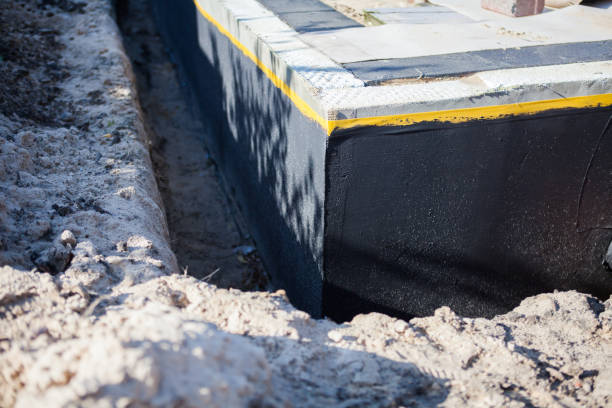
Depending on what the inspection finds, we'll recommend interior drainage, exterior grading and membrane work, or a combination of both.
We give you a realistic timeline in the written quote so you can plan around the crew being on-site.
We can document moisture readings, photos, and scope of damage to support an insurance claim, though coverage and claim approval are ultimately determined by your carrier.
We can walk your specific setup during an inspection and tell you honestly whether your existing drain needs a pump added.
Yes, every interior drainage, sump, and crack repair job comes with a written warranty, and terms are explained in full before you approve the quote.
We assess the water depth and source first, since active groundwater intrusion changes how we sequence the encapsulation work.
We work with property managers, HOAs, and commercial building owners in addition to single-family homes, including parking structures and multi-unit basements.
One call gets you a licensed technician, a written quote, and a same-day time window.
Call +1-866-476-1348© SGP Waterproofing. All rights reserved.